Atmosphere
Hydrogen, helium and methane, with white methane-ice clouds and giant storms like the Great Dark Spot.
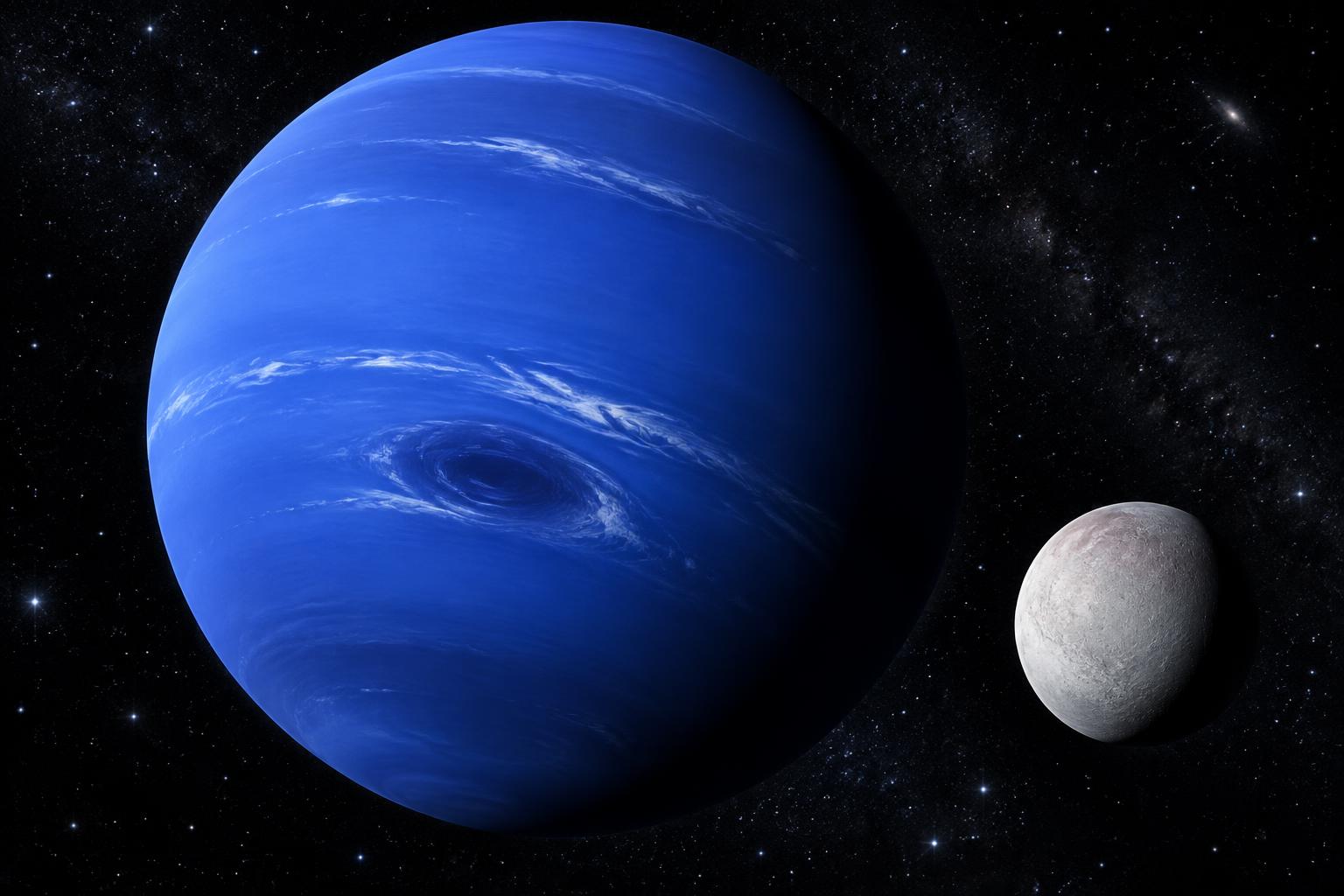
Planet 8 from the Sun
The windy blue frontier — The farthest planet, with the fastest winds in the solar system.
Distance from Earth today
4324.4M km
In astronomical units
28.907 AU
Light travel time
4h 0m
Neptune is the most distant planet from the Sun, a deep blue ice giant found by mathematics before it was seen.
Its supersonic winds blow at over 2,000 km/h, driving huge dark storms.
The real Neptune
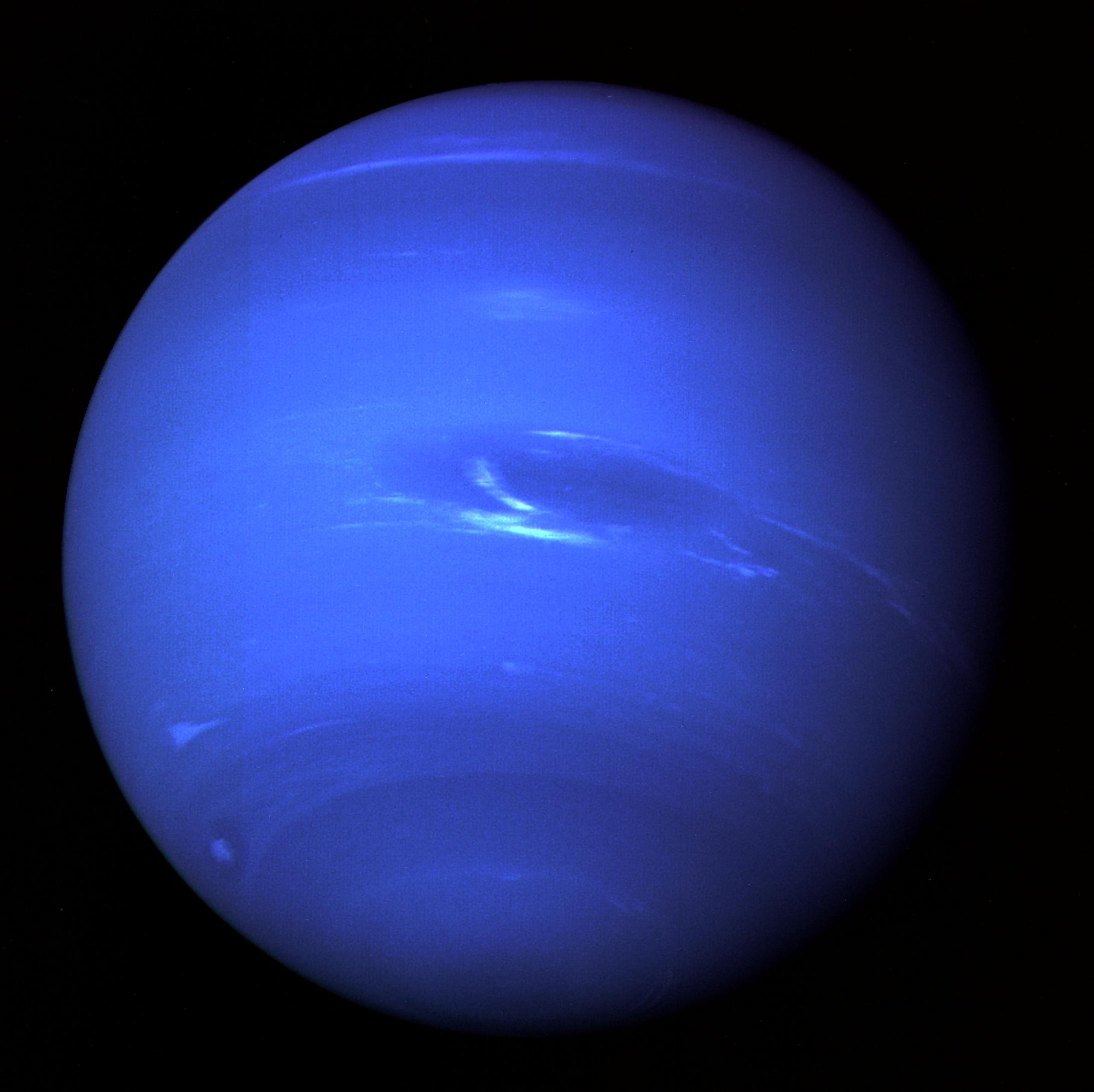
Voyager 2’s view of Neptune shows the Great Dark Spot and bright methane-ice clouds. Image processing enhances the planet’s blue color.
Image credit: NASA / JPL
Hydrogen, helium and methane, with white methane-ice clouds and giant storms like the Great Dark Spot.
No solid surface; a thick slushy mantle of water, ammonia and methane surrounds an Earth-sized rocky core.
16 known moons. Triton orbits backwards, has nitrogen geysers, and is probably a captured object from the Kuiper Belt.

Yana asks
How did scientists find Neptune using only math?
Cover: artistic illustration. Spacecraft images and radar visualizations: credited NASA mission data.