
A live snapshot of our cosmic neighborhood
Around the Sun.
Right now
Present date…
Connections from Earth
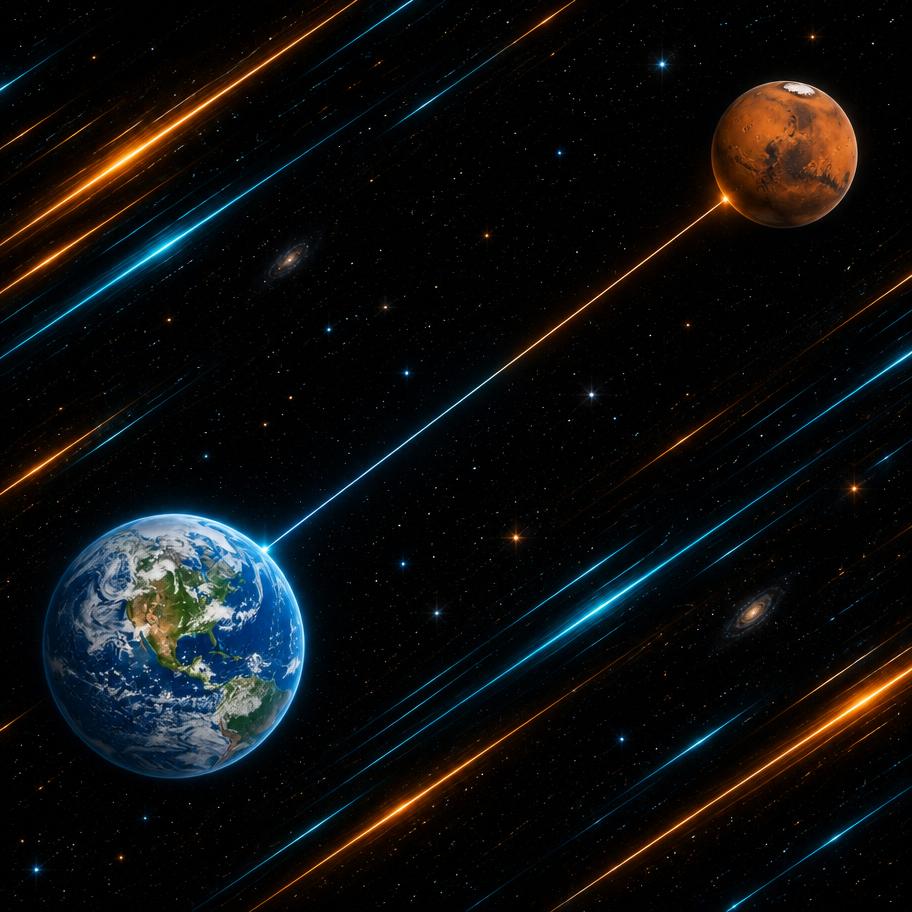
Earth → Mars
— km
— at the speed of light
Every world is moving. Mercury circles the Sun in 88 days; Neptune takes 165 years.
The math behind the line
Calculations
Every number here — the bright line on the map, the readout beside it and the Distance Ranking below — comes from these four steps.
- 01
Freeze one instant
Planets never stop, so a distance only means something with a time attached. We pick a single UTC instant: right now, refreshed every 30 seconds, or your override date at 12:00 UTC.
- 02
Ask where each world is
A planetary theory fitted to centuries of observations (VSOP87) returns each planet as a 3D arrow drawn from the Sun, measured in astronomical units. One AU is the Earth–Sun gap.
- 03
Subtract the arrows
Earth's arrow is subtracted from the planet's arrow. The length of what is left is the straight line between the two centres: √(Δx² + Δy² + Δz²).
- 04
Read the answer in km
Multiply astronomical units by 149,597,870.7 and the answer is in kilometres. Dividing by 299,792.458 km/s then shows how long light needs for the trip.
Worked example · Earth → Mars
—×149,597,870.7 km/AU=—
Answer · Earth → Mars—
Pick another planet above and the answer changes with it.
What the drawing leaves out
—The map is a flat 2D projection seen from above the north ecliptic pole; real orbits are tilted ellipses in three dimensions.
—Distances from the Sun are compressed. Sizes of the Sun and planets use a square-root scale of their real radii: Jupiter still outsizes Earth and the Sun outsizes everything, but true scale would make Mercury an invisible speck beside a Sun 285 times wider.
—The line measures centre-to-centre geometry. Light left each planet minutes or hours ago, so you always see it as it was.
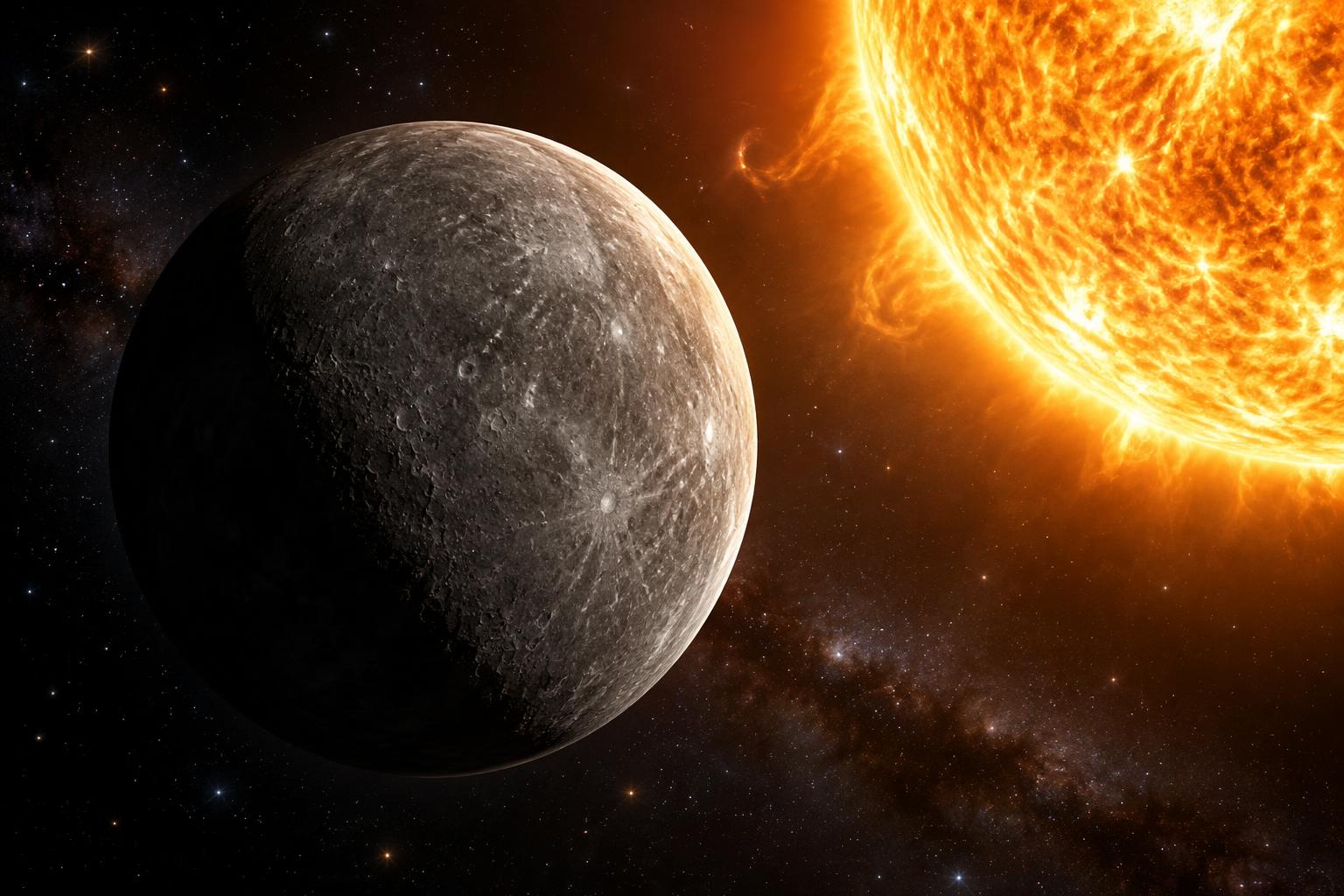
—Orbit rings are schematic. Every planet is a real photograph: Cassini (Saturn, Jupiter), MESSENGER (Mercury), Magellan radar (Venus), Apollo 17 (Earth), Hubble (Mars) and Voyager 2 (Uranus, Neptune). Cassini only flew past some worlds, so the best real image of each is used.
—This map keeps its own clock: it follows the present moment or your override, while the Distance Ranking below follows the date you choose in the calculator.
Distance ranking.
Nearest → farthest · TodayEarth → Mars
Mars
Rocky planet
A sunset on Mars looks blue. Fine dust scatters sunlight differently than on Earth.
242,357,663 km
1.620 AU13m 28s by light
From EarthDistance in kilometers
M = million · B = billion · Earth to Earth = 0 km
Distances change as planets orbit the Sun. These are approximate center-to-center distances, calculated with Astronomy Engine for your chosen date at 12:00 UTC.
Scale of the journey
13m 28s
For a beam of light to travel
from Earth to Mars.
1h 37m
For a radio message to reach Jupiter
and an immediate reply to return.
4h 0m
For a signal to reach Neptune.
Even light needs a little patience.

Light travels at 299,792 km/s · 1 AU ≈ 149.6 million km
Spotlight.
Meet the neighbors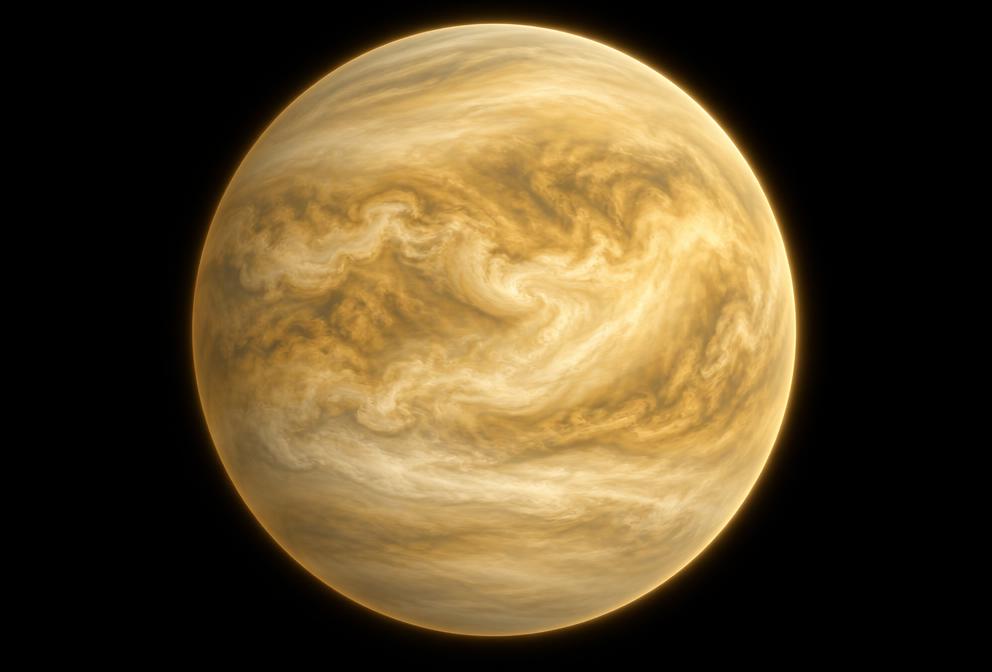
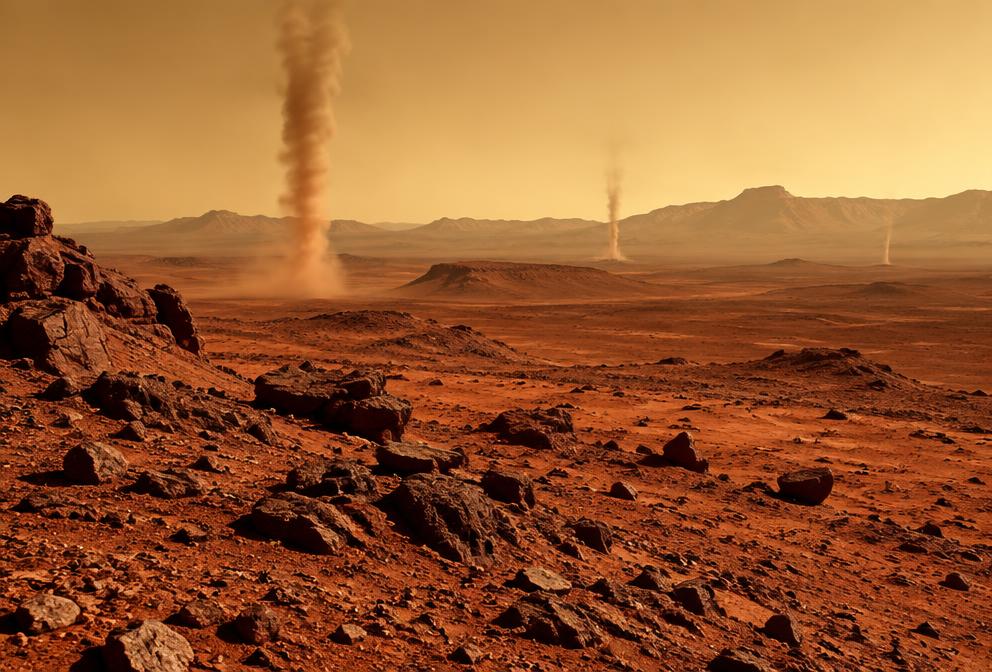
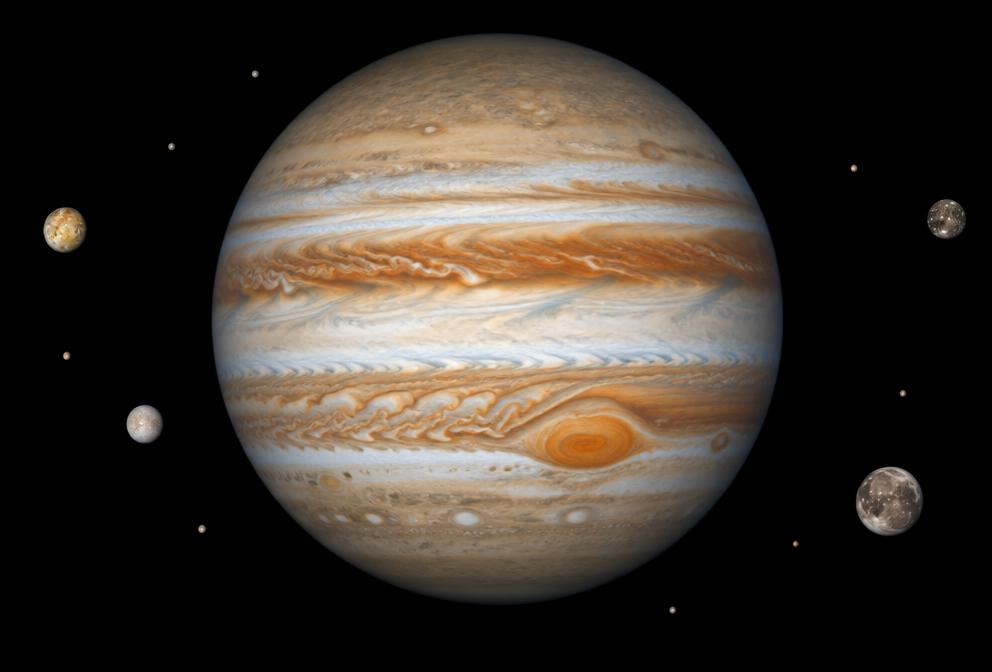
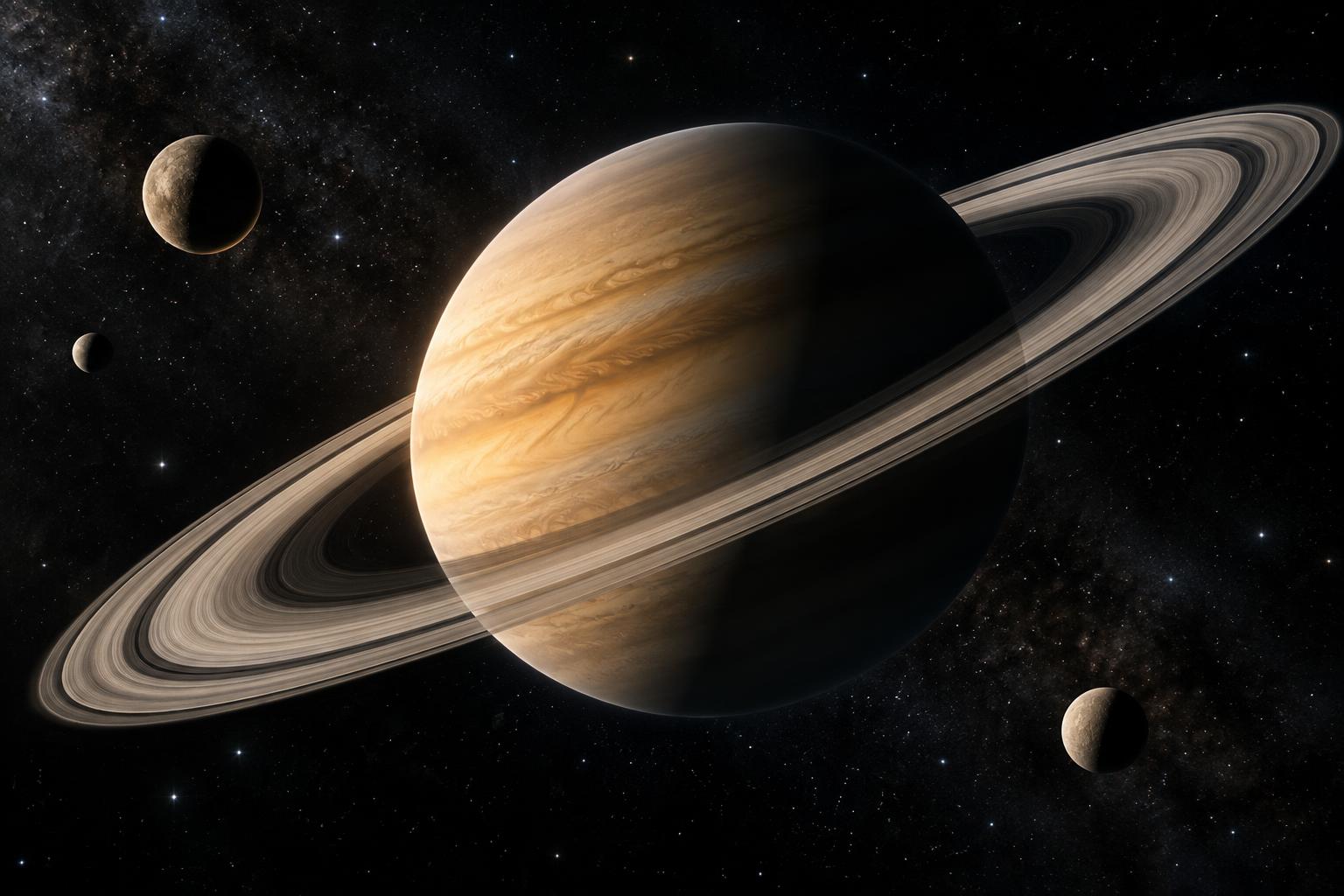
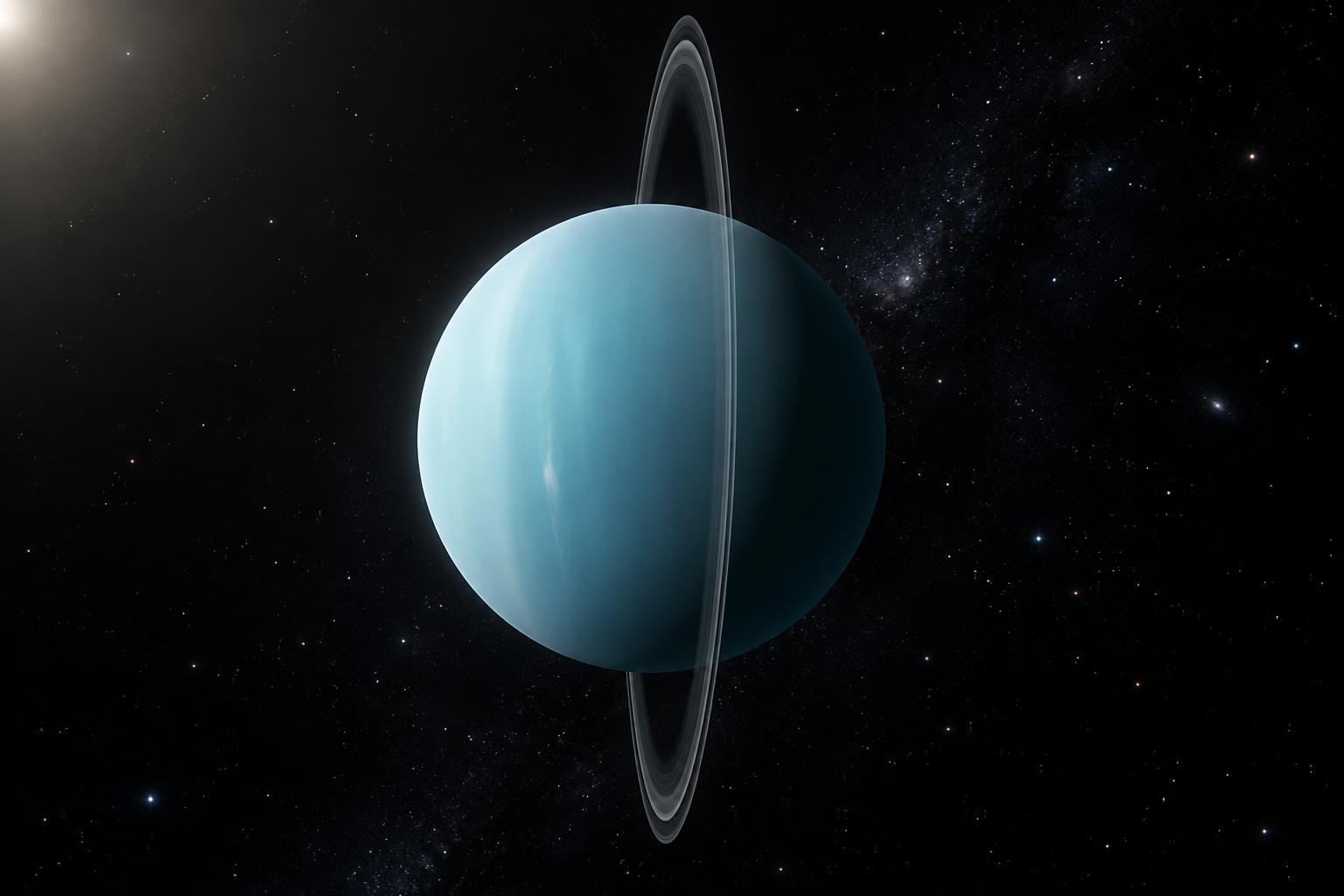
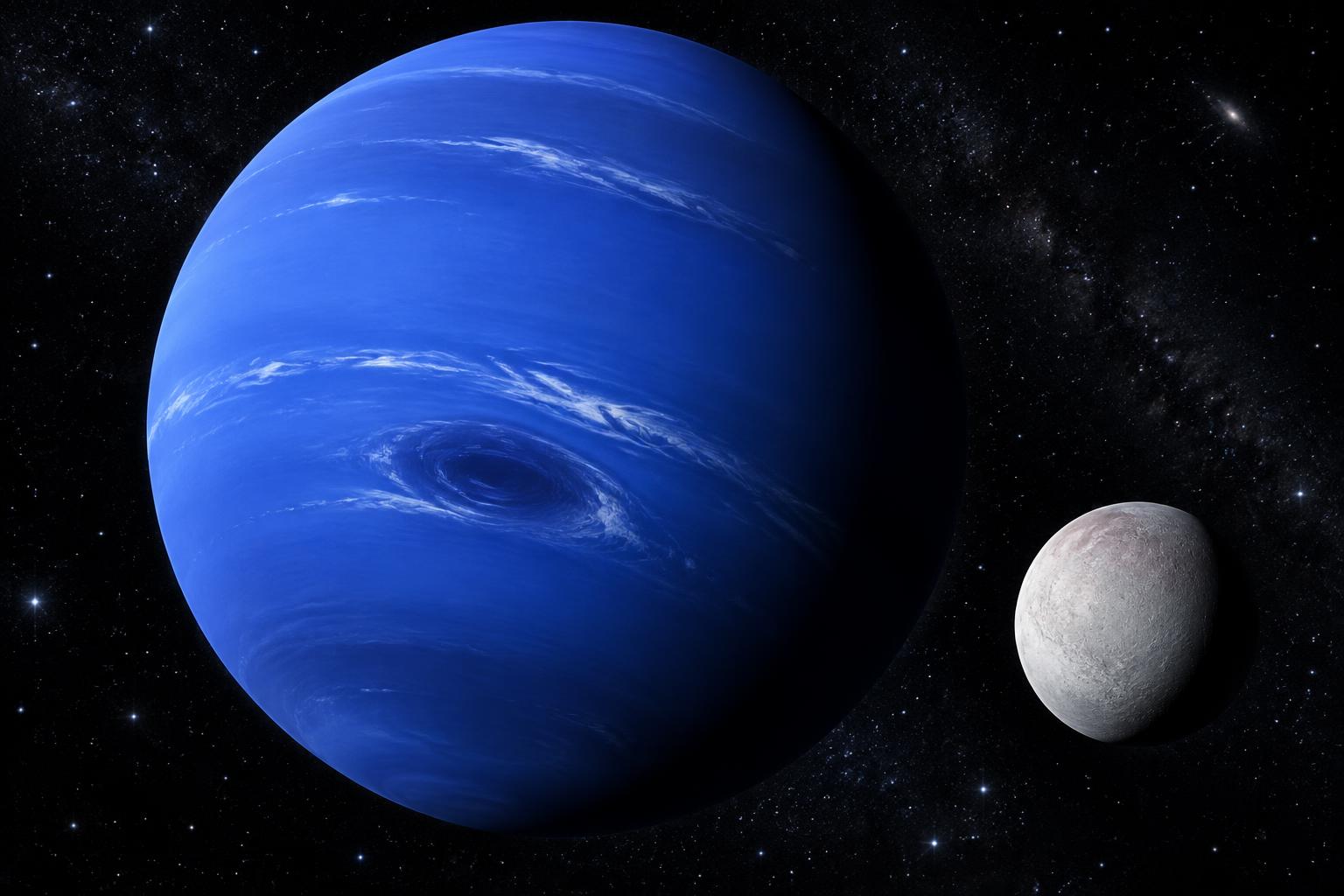
Planet imagery is artistically illustrated, not spacecraft photography.
Wait… what about Pluto?
Yana's bonus question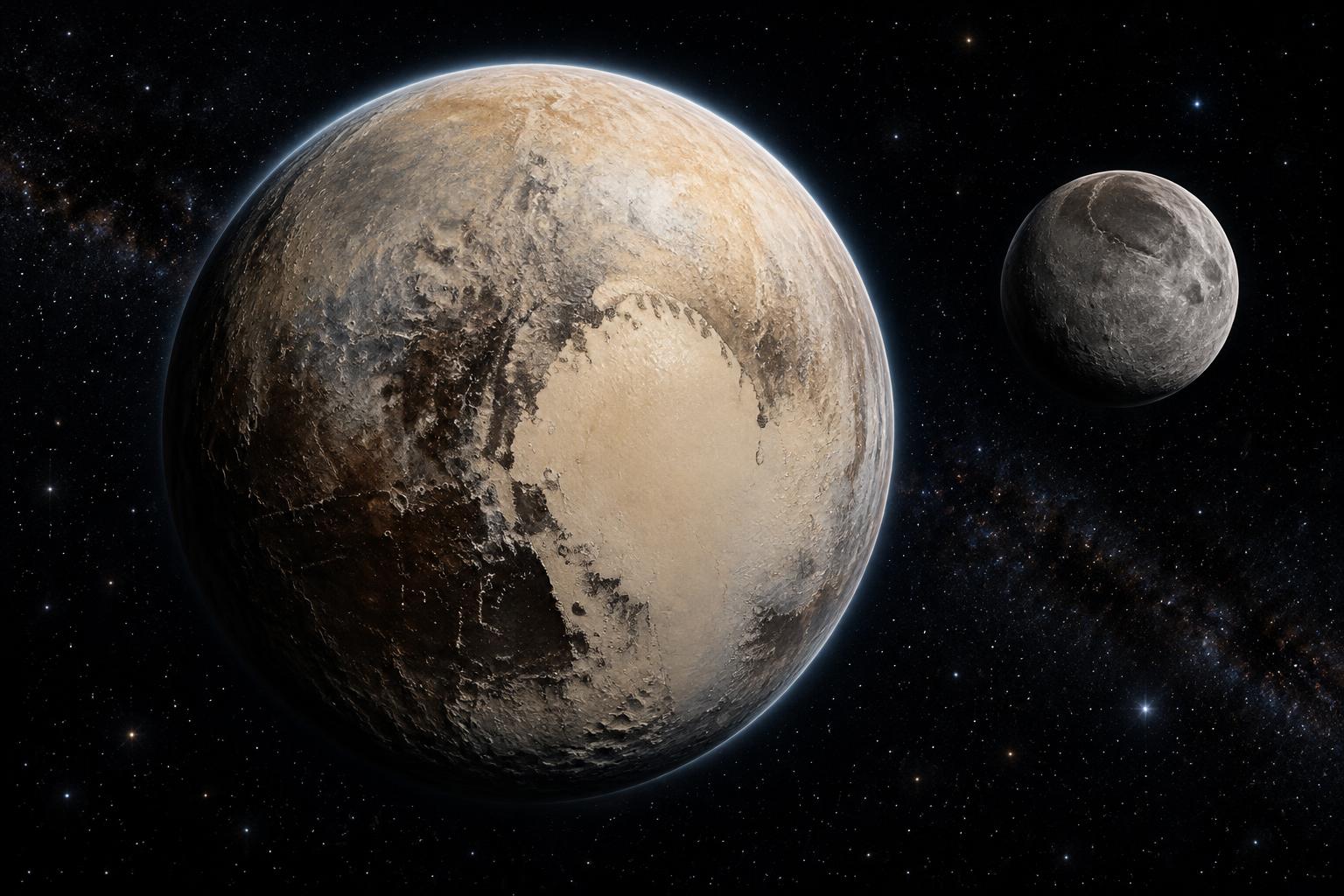

"Why isn't Pluto a planet anymore?"
Great question — and scientists asked it too. Pluto was called the ninth planet for 76 years. But in 2006, the International Astronomical Union agreed that a true planet must do three things: orbit the Sun, be round, and clear its orbital neighborhood. Pluto does the first two — but it shares its zone of space with thousands of other icy worlds in the Kuiper Belt. So Pluto became a dwarf planet: still loved, just in a new club.
Pluto
Has a heart-shaped ice plain bigger than Texas, and five moons. A year there lasts 248 Earth years.
Ceres
The largest object in the asteroid belt between Mars and Jupiter — and it may hide salty water underground.
Eris
Slightly smaller than Pluto but heavier. Its discovery in 2005 is what started the whole "what is a planet?" debate.
Makemake
A bright, frozen world covered in methane ice, named after the creation god of Rapa Nui (Easter Island).
Haumea
Spins so fast — once every 4 hours — that it has been stretched into the shape of a football. It even has a ring.
…and more
Astronomers think hundreds of dwarf planets may be waiting to be discovered in the far reaches of the solar system.
The five officially recognized dwarf planets · Pluto imagery is artistically illustrated