Atmosphere
A wisp-thin exosphere of oxygen, sodium, hydrogen, helium and potassium atoms blasted off the surface by the solar wind.
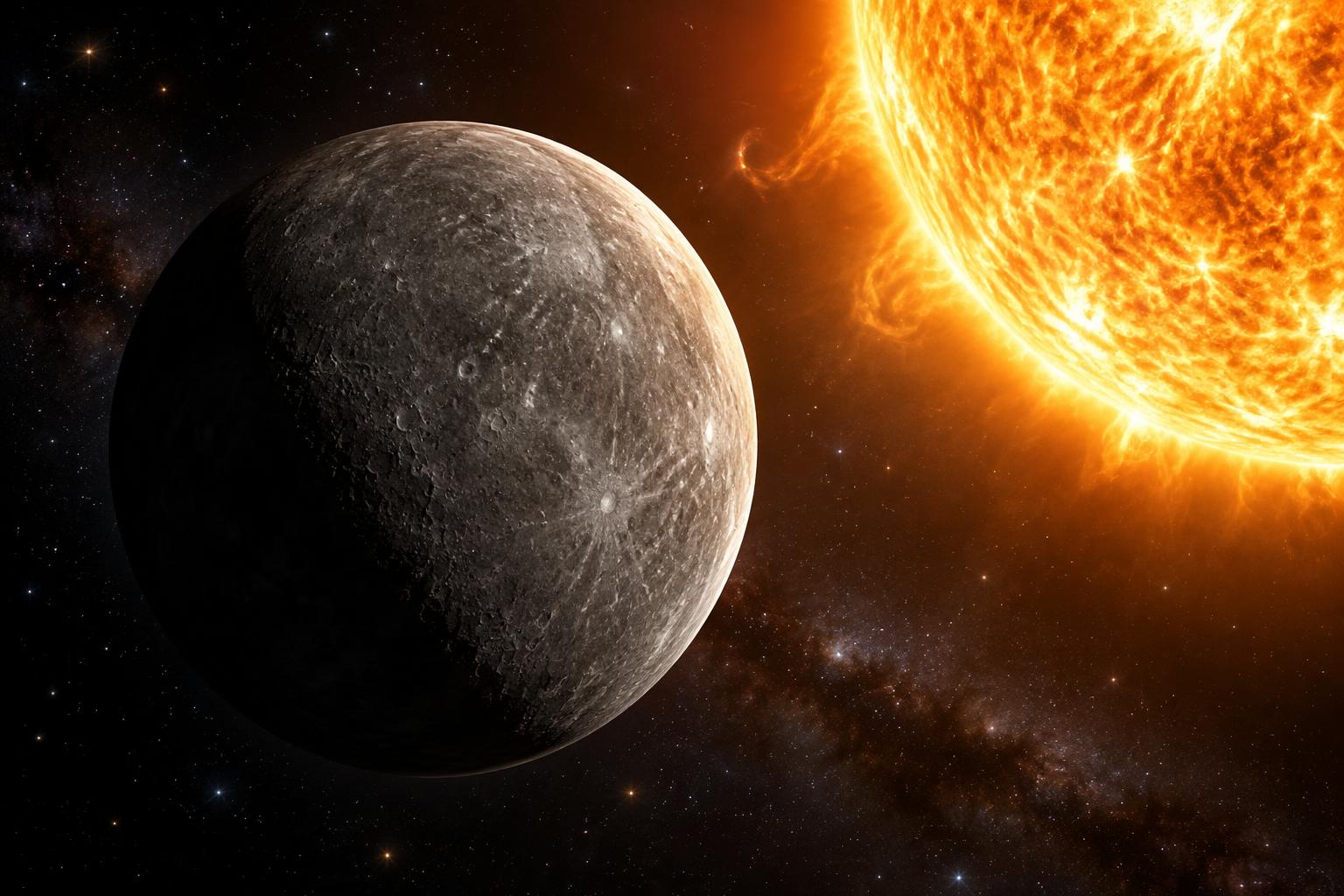
Planet 1 from the Sun
The swift messenger — The smallest planet, racing around the Sun every 88 days.
Distance from Earth today
157.5M km
In astronomical units
1.053 AU
Light travel time
8m 45s
Mercury is the closest planet to the Sun and the smallest in the solar system — only a little larger than our Moon.
With almost no atmosphere to hold heat, its days scorch at 430 °C while its nights plunge to −180 °C.
The real Mercury
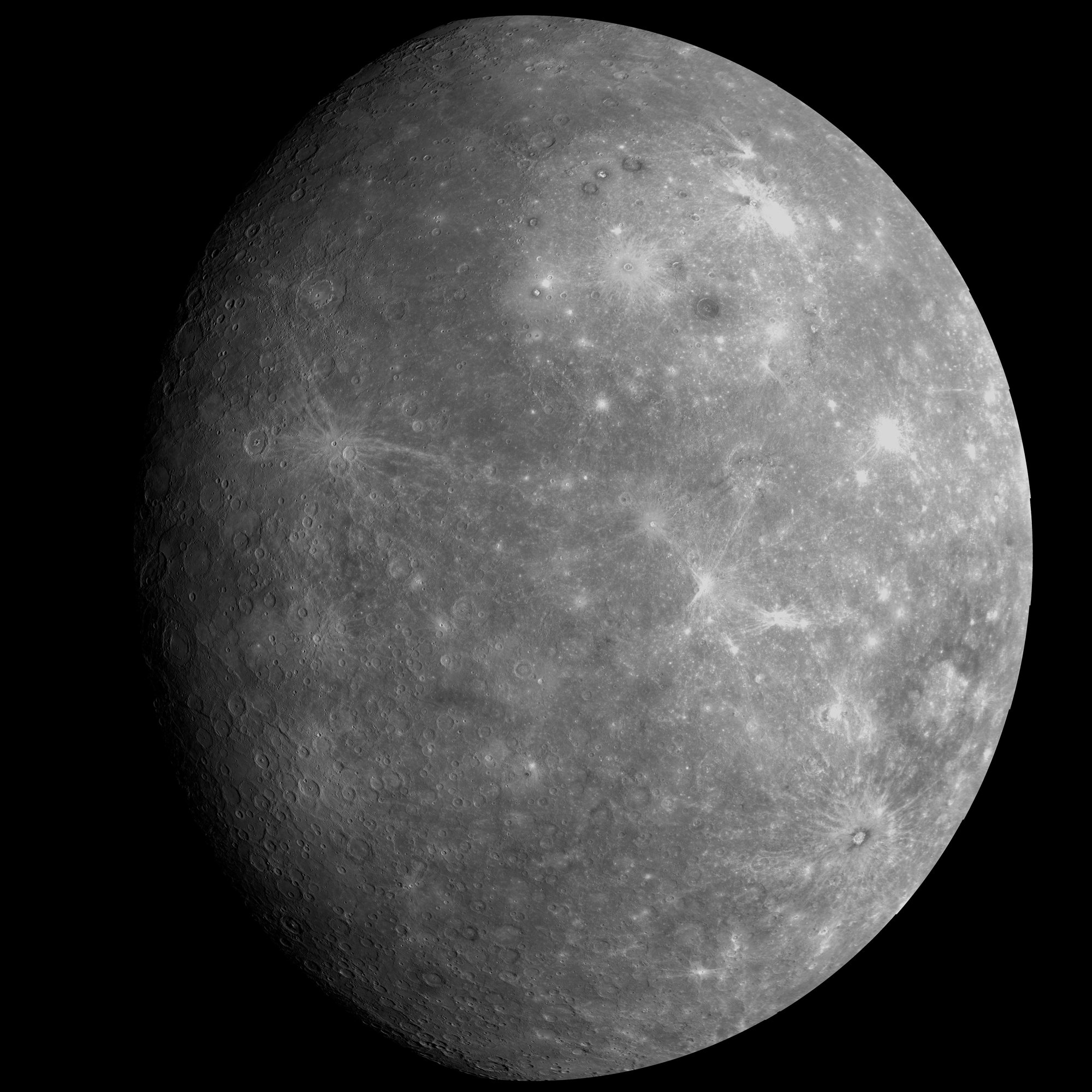
Mercury’s cratered surface in a mosaic from MESSENGER’s first flyby.
Image credit: NASA / Johns Hopkins University Applied Physics Laboratory / Carnegie Institution of Washington
A wisp-thin exosphere of oxygen, sodium, hydrogen, helium and potassium atoms blasted off the surface by the solar wind.
Grey, heavily cratered terrain much like the Moon, with long cliffs (scarps) formed as the planet’s iron core cooled and shrank.
Mercury has no moons and no rings.

Yana asks
If Mercury is closest to the Sun, why isn’t it the hottest planet?
Cover: artistic illustration. Spacecraft images and radar visualizations: credited NASA mission data.