Atmosphere
Hydrogen and helium with pale golden ammonia clouds and a strange six-sided jet stream at its north pole.
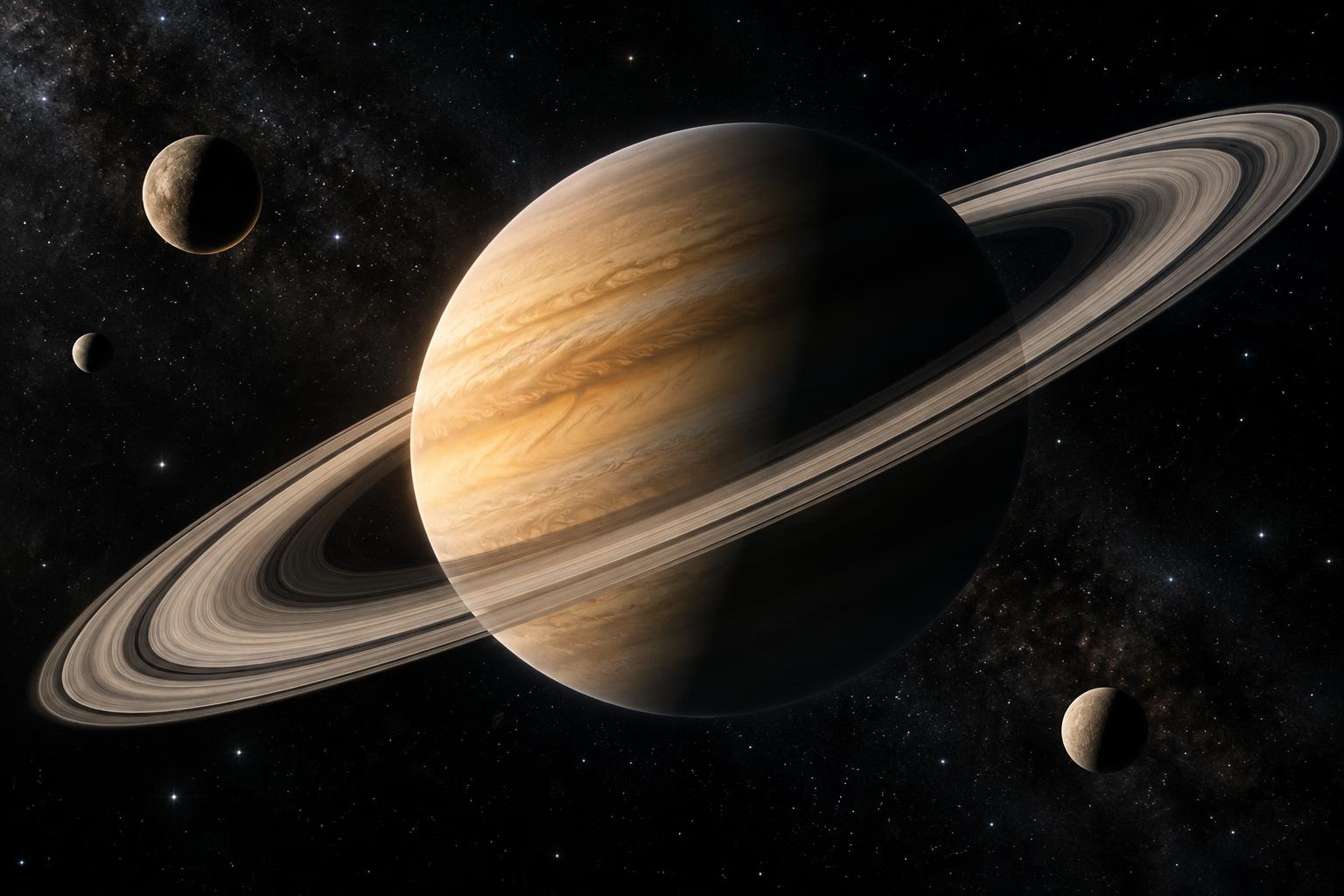
Planet 6 from the Sun
Jewel of the solar system — Spectacular rings made of ice, from tiny grains to house-sized chunks.
Distance from Earth today
1262.3M km
In astronomical units
8.438 AU
Light travel time
1h 10m
Saturn is the second-largest planet, famous for its dazzling ring system that stretches about 280,000 km across.
It is so light for its size that it would float in a bathtub big enough to hold it.
The real Saturn
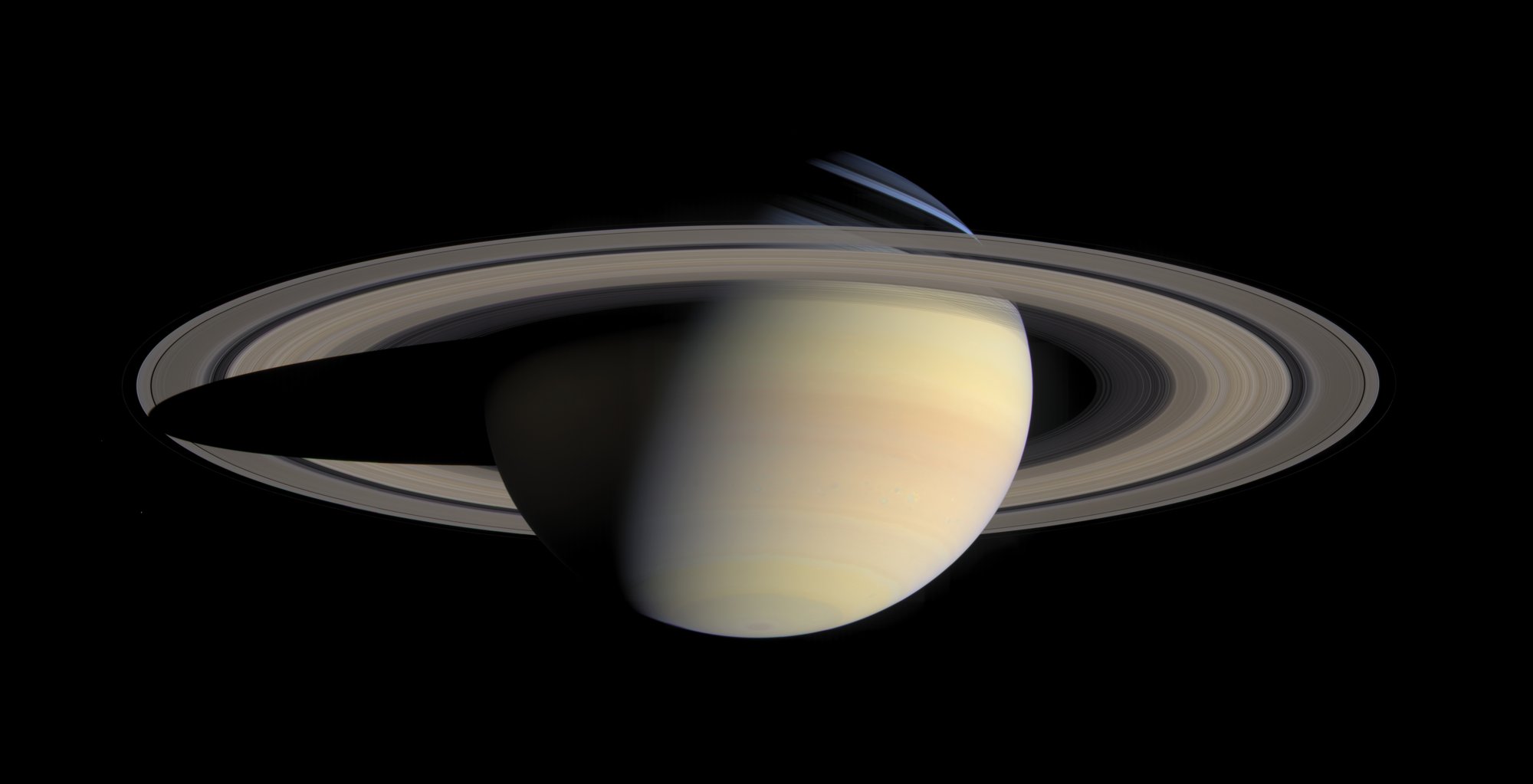
Saturn and its intricate rings in a natural-color mosaic of 126 images captured by Cassini.
Image credit: NASA / JPL / Space Science Institute
Hydrogen and helium with pale golden ammonia clouds and a strange six-sided jet stream at its north pole.
No solid surface; deep inside, pressure turns hydrogen into a liquid metal around a rocky core.
At least 146 moons, including Titan (thick atmosphere, methane lakes) and Enceladus (geysers of water ice).

Yana asks
Where did Saturn’s rings come from — and will they last forever?
Cover: artistic illustration. Spacecraft images and radar visualizations: credited NASA mission data.