Atmosphere
Mostly hydrogen and helium, with colorful bands of ammonia and water clouds and lightning bolts more powerful than Earth’s.
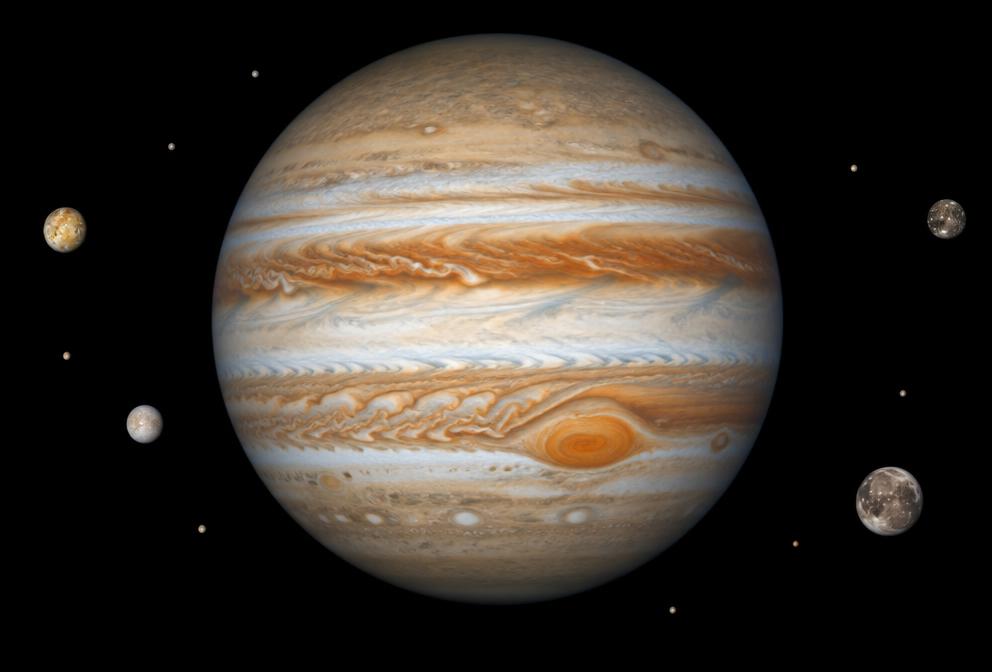
Planet 5 from the Sun
King of the planets — A giant with a storm that has raged for centuries.
Distance from Earth today
870.3M km
In astronomical units
5.818 AU
Light travel time
48m 23s
Jupiter is more than twice as massive as all the other planets combined. More than 1,300 Earths could fit inside it.
Its striped clouds of ammonia race around the planet, and the Great Red Spot is a storm wider than Earth.
The real Jupiter
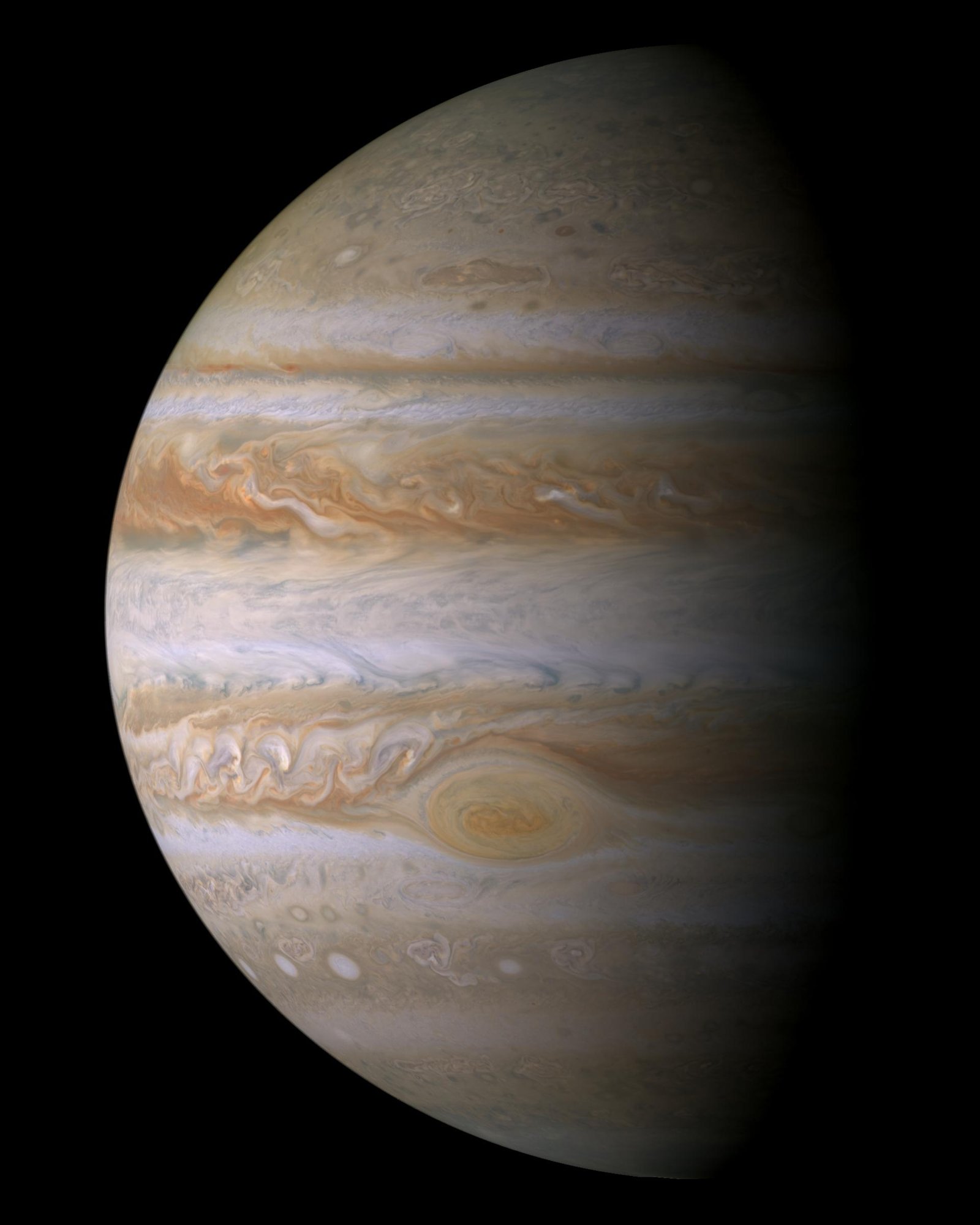
Cassini’s true-color portrait reveals Jupiter’s turbulent cloud bands and Great Red Spot.
Image credit: NASA / JPL / Space Science Institute
Mostly hydrogen and helium, with colorful bands of ammonia and water clouds and lightning bolts more powerful than Earth’s.
No solid surface — the gas gets denser until it becomes liquid metallic hydrogen surrounding a dense core.
At least 95 moons, including Io (volcanoes), Europa (hidden ocean), Ganymede (largest moon in the solar system) and Callisto.

Yana asks
Could there be life in the ocean under Europa’s ice?
Cover: artistic illustration. Spacecraft images and radar visualizations: credited NASA mission data.