Atmosphere
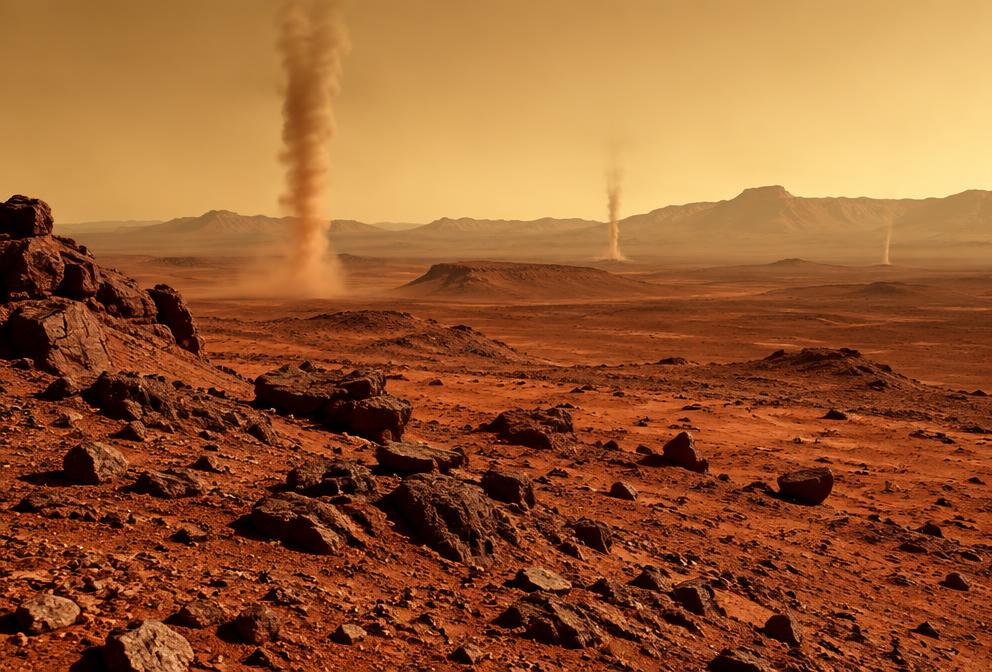
Thin and mostly carbon dioxide, about 1% of Earth’s pressure. Planet-wide dust storms can last for months.
Planet 4 from the Sun
The red explorer’s world — Blue sunsets. Giant volcanoes. A whole world of possibility.
Distance from Earth today
240.3M km
In astronomical units
1.606 AU
Light travel time
13m 21s
Mars is a cold desert world whose red color comes from iron oxide — rust — in its dust.
Ancient river valleys and lake beds show that liquid water once flowed here, making Mars a top target in the search for past life.
The real Mars
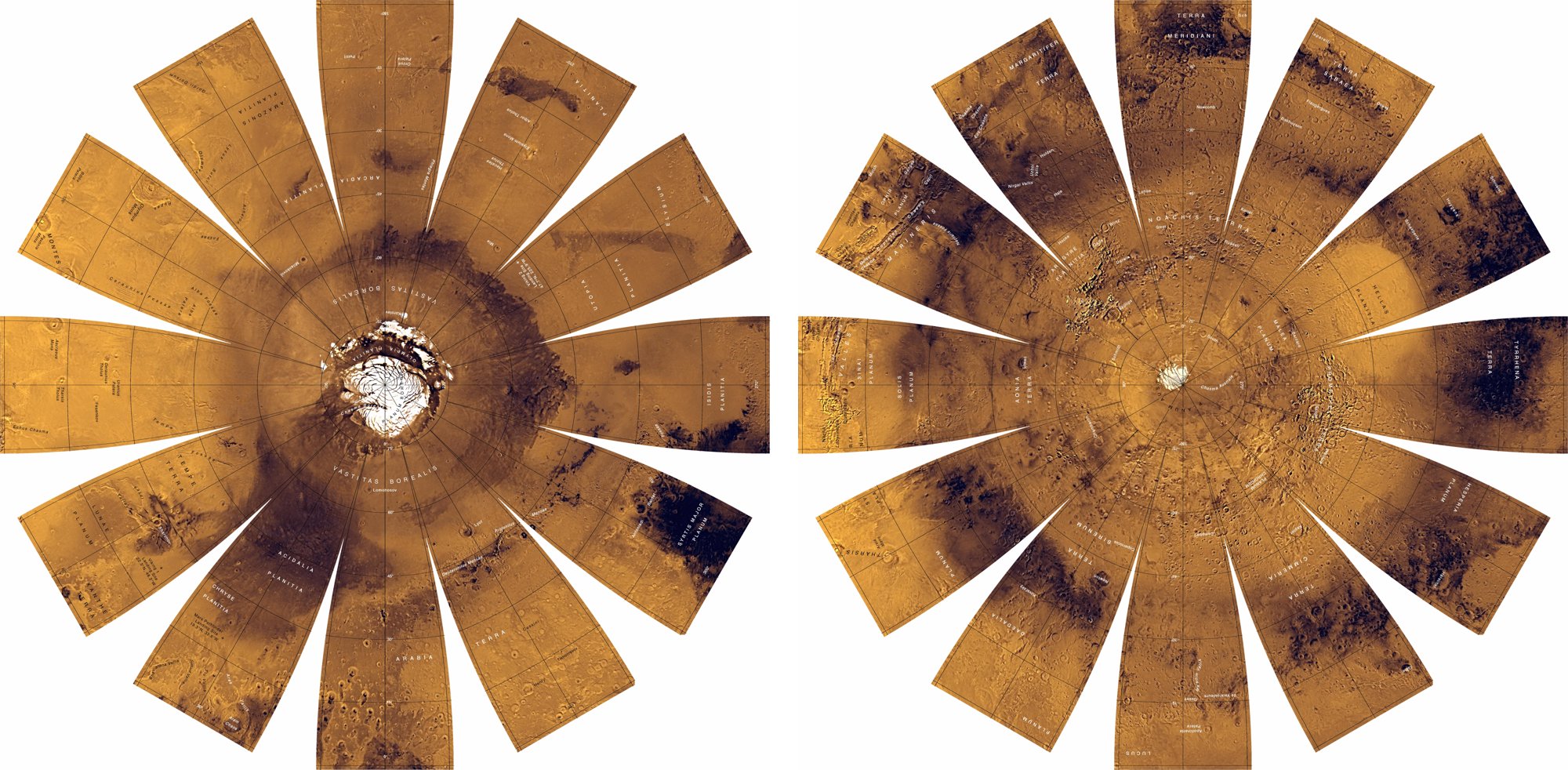
Two views of Mars assembled from thousands of Viking Orbiter images, revealing its polar caps, dark markings and enormous canyons.
Image credit: NASA / JPL-Caltech / USGS
Thin and mostly carbon dioxide, about 1% of Earth’s pressure. Planet-wide dust storms can last for months.
Home to Olympus Mons, the tallest volcano in the solar system (about 22 km high), and Valles Marineris, a canyon as long as the USA.
Two small, potato-shaped moons: Phobos and Deimos, probably captured asteroids.

Yana asks
Could people one day grow food on Mars?
Cover: artistic illustration. Spacecraft images and radar visualizations: credited NASA mission data.