Atmosphere
96% carbon dioxide with clouds of sulfuric acid. Surface pressure is about 92 times Earth’s — like being 900 m underwater.
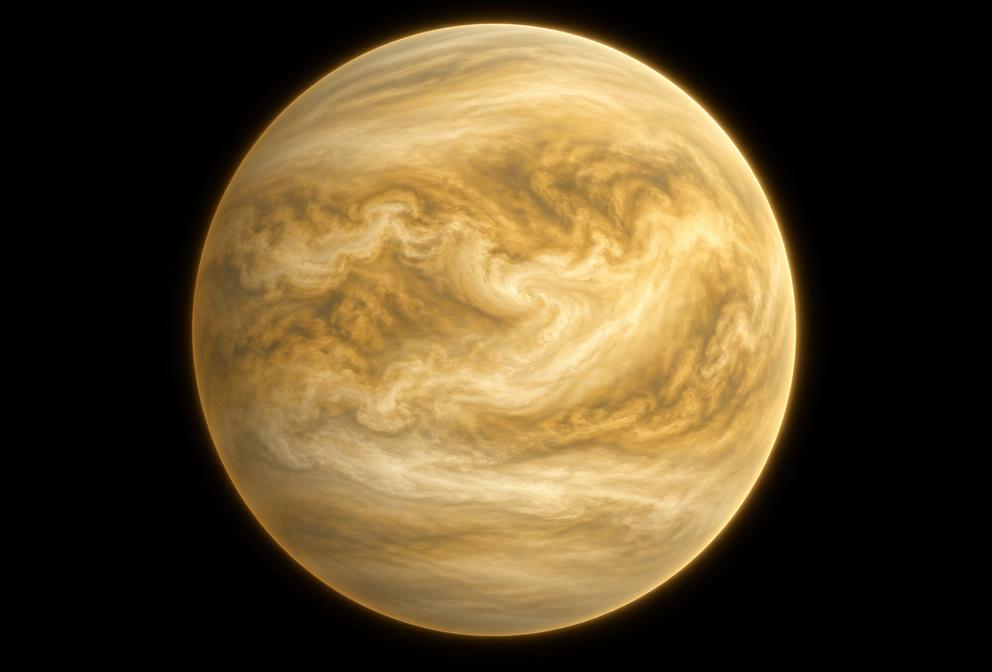
Planet 2 from the Sun
Earth’s fiery twin — Our brilliant neighbor, wrapped in a thick blanket of clouds.
Distance from Earth today
45.9M km
In astronomical units
0.307 AU
Light travel time
2m 33s
Venus is nearly the same size as Earth, but it is a world of extremes — the hottest planet in the solar system.
Its crushing carbon-dioxide atmosphere creates a runaway greenhouse effect, keeping the surface around 465 °C.
The real Venus
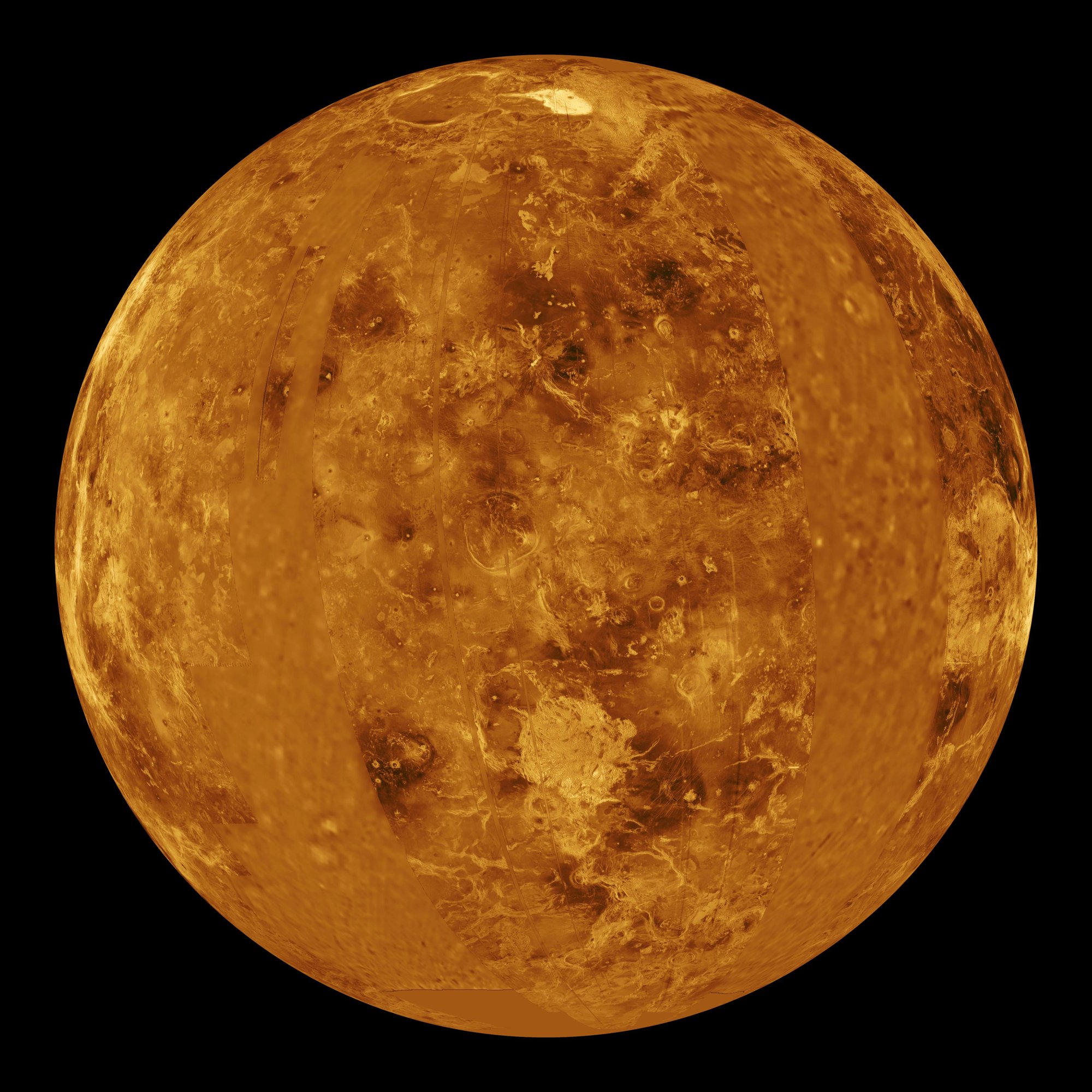
Beneath the clouds: a simulated global view of Venus built from Magellan radar data. Colors represent surface hues; this is not a visible-light photograph.
Image credit: NASA / JPL
96% carbon dioxide with clouds of sulfuric acid. Surface pressure is about 92 times Earth’s — like being 900 m underwater.
Volcanic plains, thousands of volcanoes and highland "continents", hidden beneath clouds and only mapped by radar.
Venus has no moons and no rings.

Yana asks
How can a day last longer than a whole year?
Cover: artistic illustration. Spacecraft images and radar visualizations: credited NASA mission data.